
Discussions between park leadership and U.S. Northern Command (USNORTHCOM) could pave the way for active-duty military personnel to return to Big Bend National Park for the first time in nearly three decades. The possibility of military encampments and patrols within the park has sparked concerns in a region with a history of controversial armed occupations.
Negotiations began last week as part of a broader deployment of troops to the U.S.-Mexico border. The park has declined to comment on the matter, which was relayed by anonymous sources amid recent layoffs.
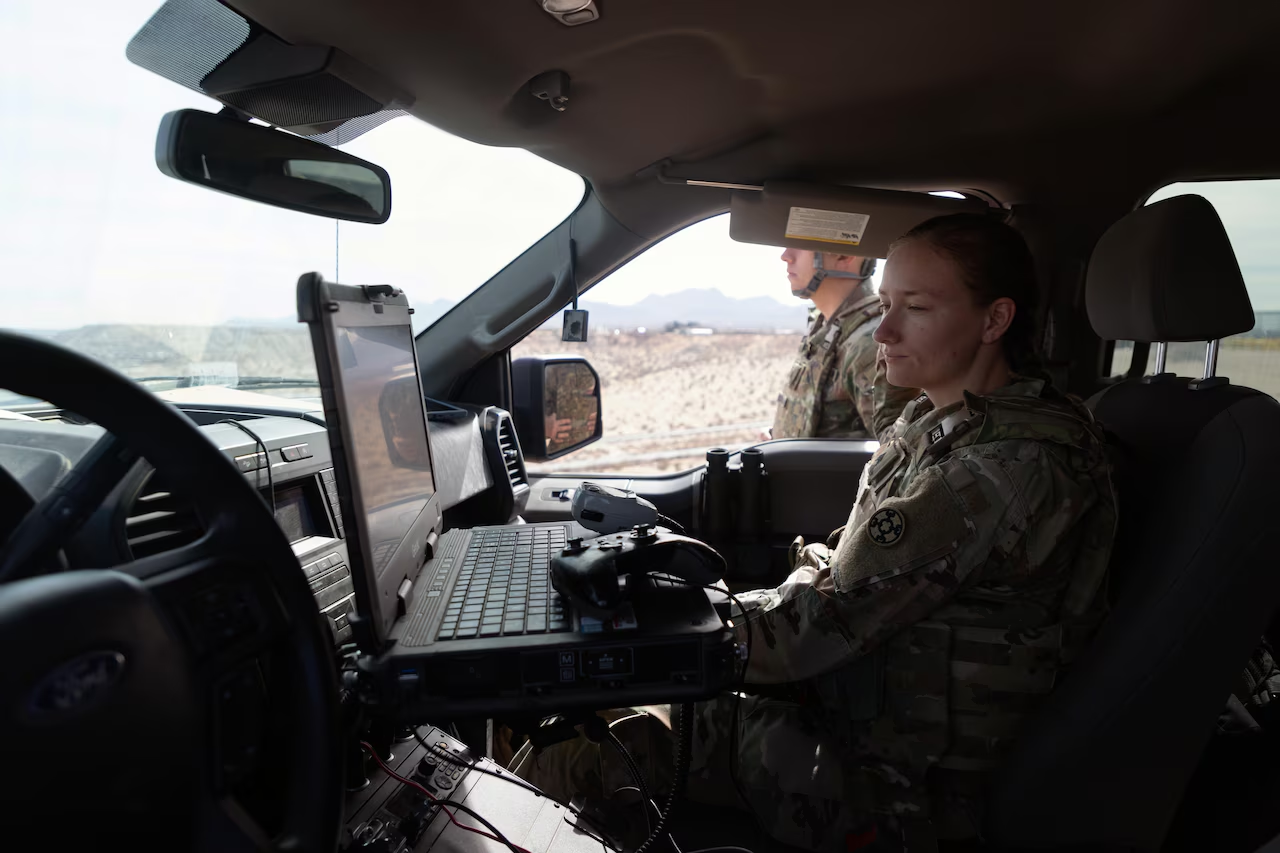
In January, 1,500 active-duty Army and Marine Corps servicemembers were announced as part of a surge to supplement the 2,500 already working with Customs and Border Protection (CBP). The military presence is expected to support detection and monitoring efforts, as well as infrastructure improvements along the border.
A Complicated History
The presence of military personnel in the Big Bend region is not new. The U.S. Cavalry operated outposts in the area before the creation of Big Bend National Park in 1944, and during World War II, the military utilized a private airfield near the park.
In the 1990s, the region saw another wave of military activity with the formation of Joint Task Force 6 (JTF-6), created as part of President George H.W. Bush’s National Drug Control Strategy. JTF-6 units conducted training exercises along the border, built roads for Border Patrol, and engaged in military-style operations in remote areas, including within the national park.
While some local officials appreciated infrastructure improvements, the military presence was met with resistance from landowners and residents. In 1993, the Jeff Davis County Commissioners Court rescinded permission for JTF-6 to operate on county land in response to local concerns.
Public opposition intensified after the 1997 shooting of Presidio High School senior Esequiel Hernandez by a U.S. Marine on a drug patrol mission in Redford. The incident led to a reevaluation of military involvement in border enforcement, and by 1998, the Pentagon halted such missions permanently.
Renewed Military Deployments
The current deployment of troops to the border coincides with a parallel deployment of 10,000 Mexican military personnel on the southern side of the border. The Trump and Sheinbaum administrations have framed these moves as efforts to curb illegal migration and drug trafficking.
While details remain uncertain regarding military operations within Big Bend National Park, the prospect of troops patrolling the area has reignited debate over the role of the armed forces in border security.
Image by Army Sgt. Caleb Woodburn
